🦵 Straight Legs, Strong Future: What Your Leg Alignment Says About Your Health
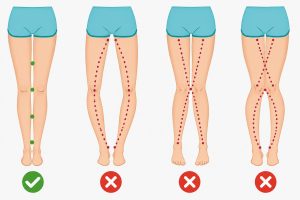
Many people pay attention to their weight, posture, and fitness, but few realize that leg alignment plays a crucial role in overall body health. The image above illustrates different leg alignment patterns, showing one healthy alignment and several common misalignments that can affect balance, movement, and joint health over time.
✅ Healthy Leg Alignment
The first illustration shows properly aligned legs. In this position, the hips, knees, and ankles form a relatively straight line, allowing body weight to be distributed evenly.
Benefits of proper alignment:
Better balance and stability
Reduced stress on the knees and ankles
Improved walking and running mechanics
Lower risk of joint pain and injuries
Better posture throughout the body
❌ Bow Legs (Genu Varum)
In this condition, the knees remain apart while the ankles are closer together, creating a bow-shaped appearance.
Possible effects:
Uneven pressure on the knee joints
Increased wear and tear on cartilage
Knee discomfort during physical activity
Altered walking patterns
❌ Knock Knees (Genu Valgum)
Knock knees occur when the knees touch or move inward while the ankles remain apart.
Possible effects:
Excess stress on the inner knee joint
Increased risk of knee pain
Poor lower-body alignment
Reduced athletic performance
❌ Rotational or Crossed Leg Misalignment
The final illustration represents a more complex alignment issue where the legs rotate inward or outward, affecting the body’s natural movement pattern.
Possible effects:
Hip, knee, and ankle discomfort
Muscle imbalance
Increased fatigue during walking or exercise
Greater risk of long-term joint problems
🔍 What Causes Leg Misalignment?
Several factors may contribute to abnormal leg alignment, including:
Genetics and bone development
Childhood growth patterns
Poor posture habits
Muscle weakness or imbalance
Previous injuries
Certain medical conditions affecting bones and joints
💪 How to Support Healthy Leg Alignment
While some alignment issues require professional evaluation, these habits may help support healthy lower-body function:
✅ Maintain a healthy body weight
✅ Strengthen the hips, glutes, and leg muscles
✅ Stretch regularly to improve flexibility
✅ Wear supportive footwear
✅ Practice good posture when standing and walking
✅ Seek medical advice if pain or significant misalignment develops
Key Message
Healthy leg alignment is more than a cosmetic issue—it affects how your entire body moves and functions. Taking care of your posture, muscles, and joints today can help prevent pain and mobility problems in the future. 🦵✨
“Strong alignment creates a strong foundation for a healthy life.”